
Community Story: Breaking Barriers
"...the services enabled by the funding have the potential to transform the circumstances of people who have faced the unimaginable, giving them independence, security and a sense of belonging in their new life and society. This is our ultimate goal."
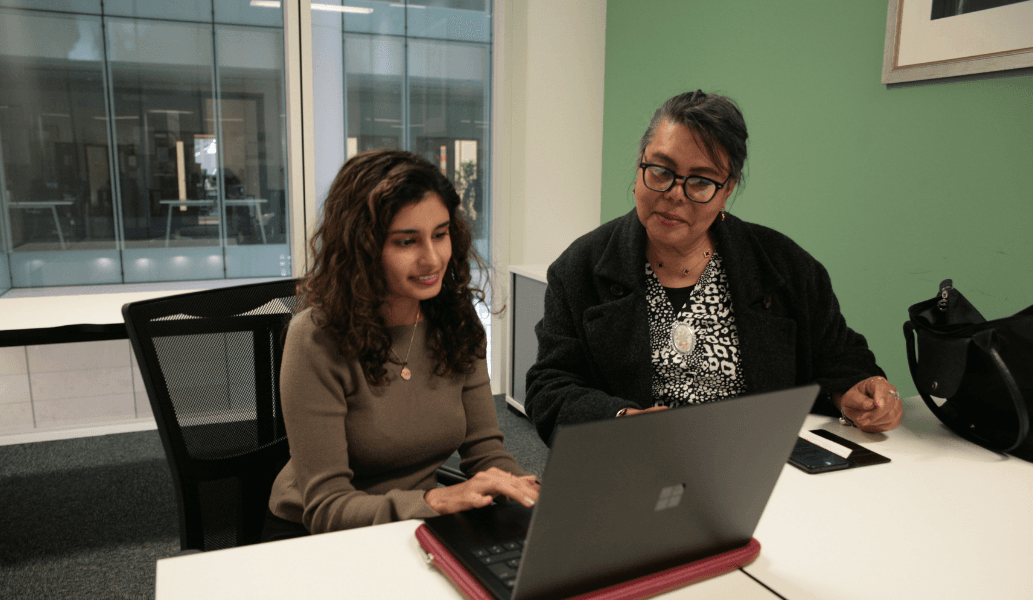
For our latest feature profiling a recent recipient of a grant from National Grid’s Community Matters Fund 2025 (Future Skills) we spend some time with Breaking Barriers, a specialist employment charity that is focused on supporting refugees in accessing meaningful employment and building a new life. Luke Upton spoke to Dilys Grocott, Philanthropy Manager at Breaking Barriers to learn more about the community they support, some particular challenges and what the Community Matters Fund grant is helping support.
Luke Upton (LU): Thanks for talking to us Dilys, could you start by telling s some more about the community you serve? And why your support is needed.
Dilys Grocott (DG): No problem, Luke, since 2015, we’ve been supporting refugees on their journey to gaining meaningful employment and building a new life in the UK. The experience of every refugee is complex and unique, but many leave behind not just a familiar place, culture and community, but their families and careers. Once here, they face many challenges, including the prolonged asylum process, language barriers and discrimination. And when they are finally able to work, they are more likely to be unemployed than people born in the UK, despite being eager to work and highly educated (almost half our clients hold a degree). We support refugees into meaningful employment in a number of ways, including career guidance, access to accredited qualifications and employment opportunities. We also believe in the power of responsible business, and forge partnerships that drive social impact and opportunities for refugees.
LU: Thanks, and what’s been your particular focus in recent years?
DG: In recent years, our goal has been to find ways to reach more refugees who need employment support, while also refining the way we work to increase the outcomes that our clients achieve. We started out in London, but expanded to Manchester and Birmingham in 2022, and into Glasgow in 2023. Last year we integrated RefuAid’s Language and Re-accreditation Programmes into our service offering. This exciting opportunity has allowed us to reach refugees on a national scale. It also expanded the employment support and expertise we offer, helping to deliver more client outcomes – in employment, education, training and volunteering – than ever before. But we recognise that with demand for our work growing, there is much more that we need to do.
"This project will help us to bridge the gap between refugees and employers, enhancing skillsets and setting employment goals. And it will allow us to address the need for tailored job market support among the refugee community."
LU: You’ve just received funding from the Community Matters Fund from National Grid and Localgiving. Can you tell us some more about the project it will help fund and what it aims to deliver.
DG: We are so grateful to the National Grid and Localgiving for their support. Thanks to the Community Matters Fund, 48 refugees based in Birmingham will benefit from targeted employability services, which will support them as they work towards their long-term employment goals and towards independence and security.
For Birmingham’s refugee community, end-to-end employability support is vital. Despite being a ‘super-diverse’ city where 57.1% of the population belongs to an ethnic group other than White British, there is a lack of targeted support to help residents develop the skills needed to secure employment. This leaves the skills attainment of people in the region way below the national average – 21% of working-age residents hold no formal qualifications compared to 15% nationwide. This project will help us to bridge the gap between refugees and employers, enhancing skillsets and setting employment goals. And it will allow us to address the need for tailored job market support among the refugee community. The fund will enable our specialist staff to help our clients in a range of ways, including career guidance, workplace-focused language training, digital literacy, job hunting support, employability workshops, and accredited qualifications. So a very big thank you!
LU: Amazing, so how important is this kind of funding to your organisation?
DG: Funding like the Community Matters Fund is essential to allow us to continue to provide our employment support services for refugees. For Breaking Barriers, it means that we can continue to fulfil our mission of supporting refugees into meaningful employment and raising awareness among employers to create more equitable hiring practices and workplaces. But most important is the impact that the funding will have on refugees. The services enabled by the funding have the potential to transform the circumstances of people who have faced the unimaginable, giving them independence, security and a sense of belonging in their new life and society. This is our ultimate goal.
LU: As we always ask, more money aside, what would help you most?
DG: We would love to see more employers make a commitment to support refugees into the workplace. This could be by working with us to understand equitable hiring practices that level the playing field for refugees re-entering employment or joining forces with us to deliver career pathways that support refugees to resume work. We’d also like to see the government lift the ban that prevents most asylum seekers from working until they are granted refugee status. This would help to eliminate the barriers to employment caused by long gaps on CVs, as well as enabling asylum seekers to regain financial independence and integrate into their new community more quickly.
LU: Before we finish up, is there anything else you'd like to inform our readers about.
DG: We hear a lot of negative rhetoric these days about the community that we serve. But we know from our colleagues, clients and friends who are from refugee backgrounds, that they enrich our neighbourhoods, friendship circles and workplaces. Refugees also offer diversity in skills, experience and the potential for innovation that can benefit businesses and communities alike, and this is something that should be recognised and celebrated.
LU: Brilliant, thanks Dilys, keep up the great work!
Read more about Breaking Barriers and their impactful work here.