
Community Story - Pickleball Scotland
"It has appeal for families and for older adults who have other racket skills and are looking for a game with less impact and physical demand than the other racket sports. It is also very social – with time off courts when you are waiting to play being spent chatting and with most games being in a doubles format."
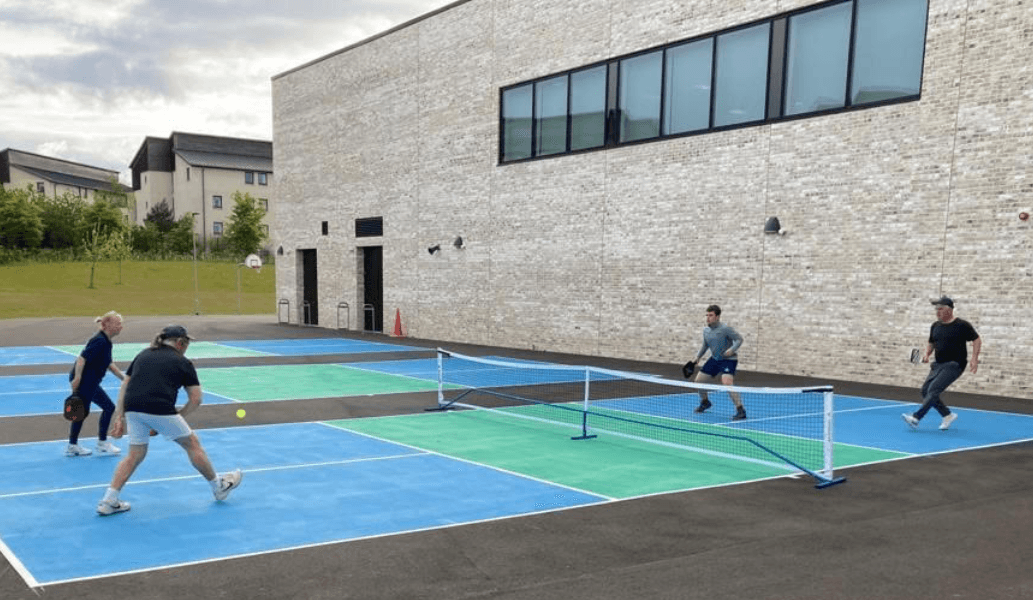
We love supporting sporting organisations the length and breadth of the country and today we are proud to put a spotlight on a sport that might be new to most of you – pickleball! Our Head of Communications Luke Upton had a great chat with Nanette Mutrie (@nanettemutrie) Professor Emerita University of Edinburgh and Coaching and Education Officer at Pickleball Scotland. So take a few minutes to read and learn about your new favourite sport!
Luke Upton (LU): Thanks for the time today, Pickleball might be a sport that is new to many of our readers, what are its origins?
Nanette Mutrie (NM): Not a problem Luke! Pickleball was invented in the 1960’s by a family in the Eastern side of the USA who had a badminton court in their driveway. They wanted a sport that could be played by different generations and started to adapt the badminton net [much lower] and the racket [a flat paddle with no strings] and the ball [an airflow ball with holes in it] to achieve that. The main thing that remained was the outside lines of the court itself and the service line got moved back. They put in a few rules as well that made the game easier to play for all levels and to avoid ‘power’ being the dominant way to win a point. For example, the serve is underhand making it difficult to ace the serve.
The return of serve must bounce before being played again by the serving team – preventing a serve and volley type of rally which ends quickly. Finally, while volleys are often played they cannot be played in front of the service line – so there is a no volley zone that stops net players winning the point quickly.
The name of the game has at least two origins: some say it was named after the family dog Pickles who would retrieve the ball. Others say Pickle the family dog was named after the game and the name came from local Pickle fishing nets and boats.
In Scotland it started slowly about 10 years ago as visitors to the States discovered it on holiday and brought equipment back to try with friends. It now has exponential growth in Scotland since the formation of Pickleball Scotland ( @PickleballScot1 ) in 2018. Pickleball Scotland is an entirely voluntary organisation dedicated to growing the game.
LU: Great, thanks, your site says that Pickleball is the “fastest growing sport in the world” – what’s driving this growth?
NM: Unsurprisingly the game grew quickly in the USA from the origins explained before and in areas where it is sunny many tennis courts began to be converted to pickleball courts. The game is easy to learn and games are possible even on the first time people play. It has appeal for families and for older adults who have other racket skills and are looking for a game with less impact and physical demand than the other racket sports. It is also very social – with time off courts when you are waiting to play being spent chatting and with most games being in a doubles format.
The same growth is happening now in Europe and in the UK and in Scotland. I would suggest Pickleball might be the fastest growing sport in Scotland now!
LU: If, I’ve never played any racquet sports – can I play Pickleball?
NM: Yes! This is a game that is easy to learn even if you have no previous racket skills. The techniques are easy, the ball is light, the rules are simple, and rallies and games can happen quickly.
LU: You’ve recently received a Magic Little Grant from Localgiving and People’s Postcode Lottery, how important was this and what did you spend the funds on?
NM: As a new organisation our funding comes only from our own efforts with membership, with equipment, with providing coach development opportunities and with events. So our budget is pretty tight and any small grants are put to very good use.
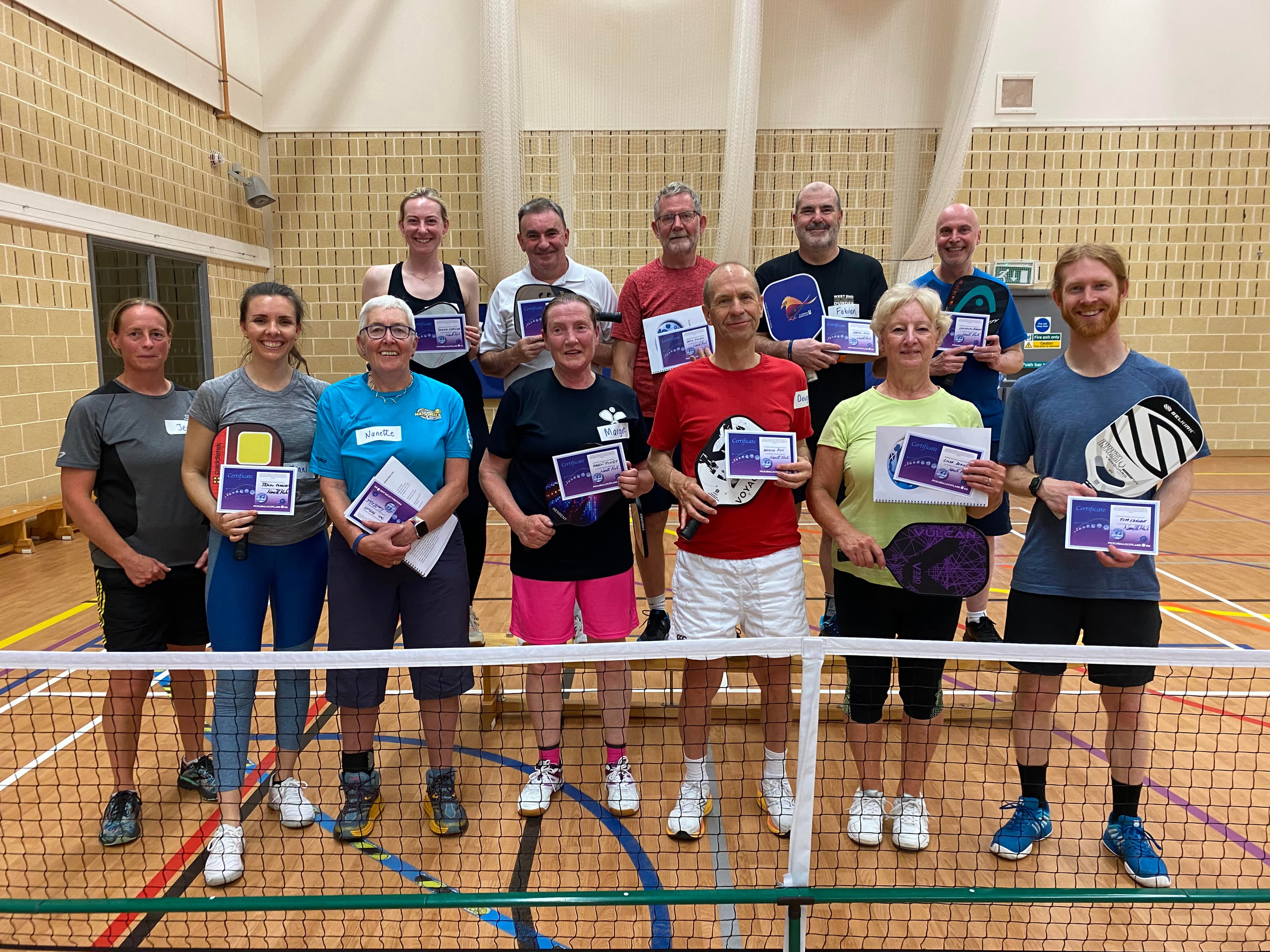
Our Magic Little Grant was used for two purposes. First we used some of the money to print materials for our upcoming coaching courses.
This gives participants the chance to have their own materials to consult and make notes on as their coach education journey proceeds. This provides better coach education and gives us a more professional look. Second we used some of that money to provide one more ‘development bag’. The bags contain basic paddles and balls.
These are in use throughout Scotland to introduce the game in places without any equipment. This brings the game to new areas and helps us grow the game. A big thank you to People’s Postcode Lottery and Localgiving for helping support the continued growth of Pickleball!

"We would love to move forward to a more professional position in which we had some paid employees to help administer the various aspects of growing Pickleball in Scotland and to be able to offer payment to those providing coach development opportunities or actual coaching at club or area levels."
LU: What coaching qualifications are available or planned?
NM: We have devised a particular approach to coaching which revolves round our 5 key values. These values are for both coaches and participants to strive towards. They are:
- Be safe. Includes warming up, making sure play stops when ball rolls across courts, keeping people physically and emotionally safe, and safeguarding issues
- Have fun. Players and coaches are responsible for creating a fun and inclusive environment which promotes physical and mental and social health.
- Game on! Use the game to to help people learn the tactics and skills – conditioned games can be invented
- Be generous. As a player praise your opponents’ good shots; be generous with line calls – ‘if in doubt the ball is in’.
- Efforts are successes! Winning is not everything. Encourage building motivation towards improvement rather than winning; use positive comments when things are working well more than negative comments when things are not going well.
Our first award is called Ambassador and provides people with the skills to introduce pickleball to others for the first time. Next is the Club Coach award which provides people with coaching skills and pickleball specific skills knowledge. We will eventually have a performance award and we are working on a disability addition to the Ambassador approach.
LU: What would most help support the growth of Pickleball?
NM: The simple answer here is more money. At the moment the whole Pickleball Scotland enterprise is led by a group of skilled volunteers with no paid officials to help progress. All of the coach development opportunities are offered by volunteers who don’t get paid. We would love to move forward to a more professional position in which we had some paid employees to help administer the various aspects of growing Pickleball in Scotland and to be able to offer payment to those providing coach development opportunities or actual coaching at club or area levels. Perhaps there is someone reading this who would love to become a sponsor of Pickleball Scotland?
LU: And finally, in one sentence, tell our readers why they should start playing the game?
NM: Give the game a go because it is easy to learn and it produces fun rallies right away and such physical activity, as we know, provides physical and mental and social health benefits.
LU: Brilliant, thanks for the time Professor Mutrie
Learn more about Pickleball Scotland here and support them via Localgiving here.