
Thu Jul 30 2026
Community Story: Green Schools Project C.I.C.
One secondary school pupil told us: "I think climate change is too much of a large-scale sort of issue and before it just seemed like I couldn't really do anything about it... But doing Zero Carbon Schools has really shown me that we can do little things in our school."
A focus on the future
For our first article looking at a recent recipient of a grant from the Eastern Green Link 1 (EGL1) England Local Community Fund from National Grid Electricity Transmission we travel to Sunderland in the North East of England to connect with the Green Schools Project C.I.C. to hear directly about an exciting project from the team there. Luke Upton spoke with Georgina Belcher, to learn about the importance of supporting young people reduce their carbon footprint, gain insights from those they support, understand their biggest challenge and more.
Luke Upton (LU): Thanks for taking some time to speak to us today Georgina, as an introduction, could you please tell us some more about the importance of climate education sessions. And why this is becoming increasingly important.
Georgina Belcher (GB): No problem, Luke. Climate education has never been more important. Young people are growing up in a world already experiencing the impacts of climate change, from more frequent extreme weather to rising concerns about biodiversity loss and energy security. Many children tell us they are worried about the future, yet they often don't feel they have the knowledge or opportunity to make a difference.
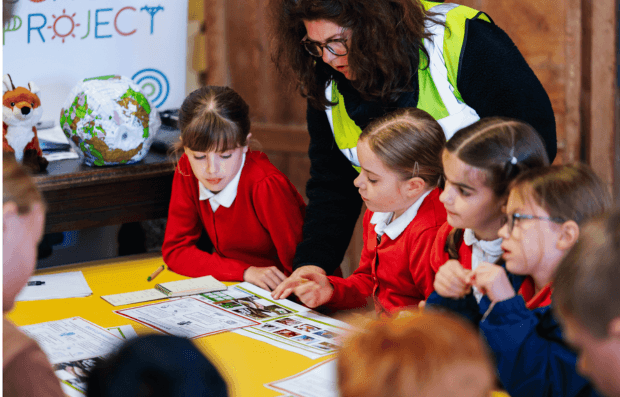
At Green Schools Project, we believe climate education should move beyond learning about the problems and instead empower young people to be part of the solution. Our programme combines curriculum-linked climate education with practical, pupil-led action, enabling children to investigate their school's carbon footprint and lead projects that make a real difference within their school and local community.
Our Green Schools Programme not only increases knowledge and confidence but also develops skills such as teamwork, leadership, problem-solving and critical thinking. It helps pupils understand the growing opportunities within the green economy while showing them that meaningful climate action is something they can get involved with and make a difference.
As schools continue to play an increasingly important role in preparing young people for the future, high-quality climate education is essential for equipping the next generation with the knowledge, skills and confidence they need to thrive.
"...made me feel better and more important than I ever experienced."
LU: Fantastic, could you share some of the feedback and impact you’ve seen from the children you engage with?
GB: One of the most rewarding aspects of our work is seeing young people realise that they can make a genuine difference. Through our Green Schools Programme (formerly known as Zero Carbon Schools), pupils lead projects that improve their schools and communities, helping to transform concern into action.
Our latest Impact Report shows 97% of teachers say the programme helped pupils develop teamwork and communication skills, while 96% said pupils felt more positive about tackling climate change. And 98% of teachers said they would recommend the programme to other schools.
The feedback we receive from pupils is incredibly inspiring. One secondary school pupil told us: "I think climate change is too much of a large-scale sort of issue and before it just seemed like I couldn't really do anything about it... But doing Zero Carbon Schools has really shown me that we can do little things in our school."
A Year 5 pupil shared: "Zero Carbon Schools made me feel better and more important than I ever experienced."
Beyond the classroom, pupils have launched initiatives including bike buses, uniform swap-shops, composting schemes, energy-saving campaigns and community awareness events. These projects help schools reduce their environmental impact while giving children the confidence and leadership skills to create positive change. As one teacher reflected: "The children feel really purposeful and have taken ownership of their projects to make an impact on reducing our carbon footprint."
LU: That’s brilliant to hear those voices. You’ve just received funding from the Eastern Green Link 1 (EGL1) England Local Community Fund from Fund from National Grid Electricity Transmission and Localgiving for a project in Sunderland. Can you tell us some more about the project, what it will help fund and what it aims to deliver.
GB: We are absolutely delighted to have received funding through the EGL1 England Local Community Fund, delivered by National Grid Electricity Transmission and Localgiving.
The funding will enable us to deliver our premium Green Schools Programme in three schools across Sunderland, including Thornhill Park School, a specialist setting. Over the course of the programme, we'll work directly with around 120 pupils and 60 teachers through 26 climate education sessions, outdoor learning, teacher training and hands-on support.
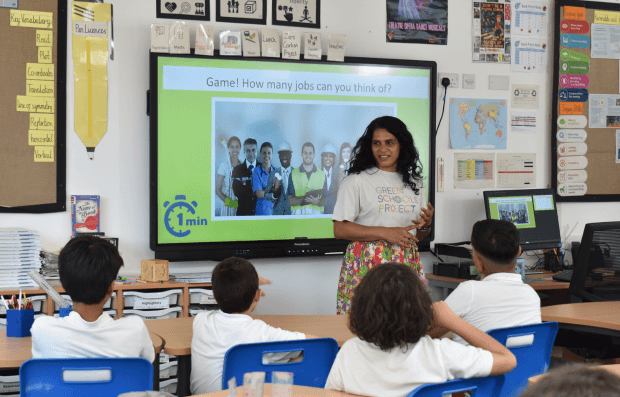
Pupils will calculate their school's carbon footprint before designing and leading projects to reduce emissions in areas such as energy, travel, food and purchasing. They'll also explore green careers and work with their wider communities through awareness events and environmental action.
The project has a strong focus on inclusion, with additional support to ensure our programme is accessible for autistic learners at Thornhill Park School. Alongside measuring improvements in climate knowledge and confidence, we'll also monitor carbon reduction activities and community engagement to understand the project's longer-term impact.
We're excited to support Sunderland schools in developing the knowledge, skills and confidence to lead meaningful climate action within their own communities.

"By working together, we can give more young people the opportunity to develop the skills and confidence they'll need for a greener future."
20,000 pupils and 6,000 teachers
LU: How important is this kind of grant funding to your organisation?
Grant funding like this is absolutely vital to our work. As a small not-for-profit social enterprise, grant funding enables us to bring our programmes to schools that may otherwise be unable to access specialist climate education. It allows us to invest in high-quality resources, experienced educators and ongoing support while keeping participation free for state schools.
Grants also allow us to develop and adapt our programmes to meet local needs, whether that's supporting schools in areas experiencing higher levels of disadvantage or ensuring our resources are accessible for pupils with additional needs. Without funding from organisations such as National Grid Electricity Transmission and Localgiving, many of these opportunities simply wouldn't be possible. So a very big thank you once again.
LU: As we always like to ask our community members, more money aside, what would help you most?
GB: Partnerships with organisations that share our commitment to supporting young people and creating more sustainable communities are incredibly valuable.
We're always keen to work with schools, businesses and community organisations that can help us extend our reach. Whether that's through volunteering, sharing expertise about green careers, providing local connections, or helping us introduce our programme to more schools, these partnerships significantly increase our impact.
We're also keen to hear from organisations looking to deliver meaningful social value through employee volunteering or partnerships. By working together, we can give more young people the opportunity to develop the skills and confidence they'll need for a greener future. So if you do want to chat to us about our work and how you could get involved, contact us today!
LU: Thanks so much for the time today, is there anything else you'd like to inform our readers about?
GB: Green Schools Project has worked with more than 450 schools across the UK and has supported over 20,000 pupils and 6,000 teachers to take meaningful climate action.
This year we're continuing to expand our Green Schools Programme, supporting more schools to reduce their carbon emissions while embedding climate education across the curriculum. We're also aiming to grow our work with specialist settings to ensure climate education is accessible to every young person, regardless of their needs.
Alongside our work with schools, we're developing partnerships with businesses that want to create meaningful social value by supporting climate education and inspiring the next generation of green leaders.
Anyone interested in learning more about our work, supporting a local school or partnering with us can find out more by clicking here
LU: Brilliant, thanks very much. We look forward to keeping our community up to date with your developments.
You may also be interested in:
About Localgiving
Localgiving is a leading online fundraising platform and grant delivery partner, focused on supporting small charities, CICs and community organisations. Since 2010, we've helped thousands of groups across the UK raise tens of millions of pounds and make a meaningful impact in their local communities.
Our platform offers an easy-to-use suite of powerful fundraising tools alongside AI-powered support for finding and applying for grants—equipping organisations with everything they need to grow and succeed.
We also collaborate with major partners, including National Grid and Scottish Power, to deliver corporate grant programmes and connect funding with the communities that need it most.
Join Localgiving today and unlock new opportunities to supercharge your fundraising.
---> Get started with Localgiving with our free 14-day trial