
Wed Oct 14 2026
Community Story: The Acrewood Project
"We hope the project will replace fear with fascination and give children a lasting sense that even the smallest creature has an important place in the world, just as they do."
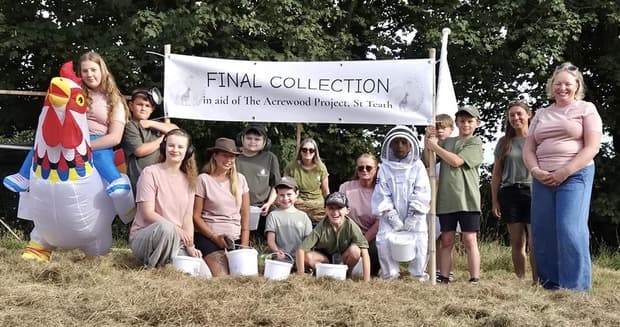
Welcoming and usable all year round
For our latest feature profiling a recent recipient of a Community Matters Fund (Green Spaces 2026) from National Grid, we’re in North Cornwall to find out about a fantastic project from The Acrewood Project. Luke Upton chatted with co-founder Sian Hewett about how a small family nature project grew into an alternative education provider, and how Honey Hollow will help children discover bees, pollinators and the natural world.
Luke Upton (LU): Thanks for your time today, Sian. To start, could you tell us a little about the origins of The Acrewood Project and how the organisation has evolved?
Sian Hewett (SH): The Acrewood Project began in August 2024 with a simple belief: some children need room to breathe before they can begin to learn. Our own daughter struggled in the school environment and was diagnosed as autistic. Her school trauma meant it was a very long time before she was able to return to formal learning, and we found that nature-based learning worked far better in helping her heal and reconnect.
What started as a small, nature-based project has grown into a registered charity and an approved alternative education provider, supporting children and young people who may have SEND, anxiety, sensory differences or difficult experiences of school. Our little off-grid smallholding in North Cornwall has gradually become a place of animal husbandry, muddy boots, campfires, den building and genuine belonging. Along the way, our family of children, volunteers, staff and rather opinionated animals has grown too!
Although the organisation has evolved enormously, its heart remains unchanged: meeting each child exactly where they are and helping them rediscover confidence, wonder, curiosity and belonging.
LU: What are you currently focusing on, and what are the main priorities for the organisation at the moment?
SH: Our greatest priority is creating a safe, sustainable place where children who have struggled elsewhere can flourish. We are strengthening our educational programmes and developing practical certificates in areas such as animal care, wildlife, heritage skills, carpentry and smallholding. We are also improving the site so it stays welcoming and usable all year round, despite being entirely off-grid.
Demand for our provision is growing quickly, so sustainability is incredibly important. We want to support more children without losing the gentle, personal approach that makes Acrewood special. That means caring for our staff and volunteers, maintaining high standards of safeguarding and animal welfare, and developing the facilities needed for children with a wide range of needs. Every new structure, course and muddy pathway is helping us build a place where difference is understood and celebrated.
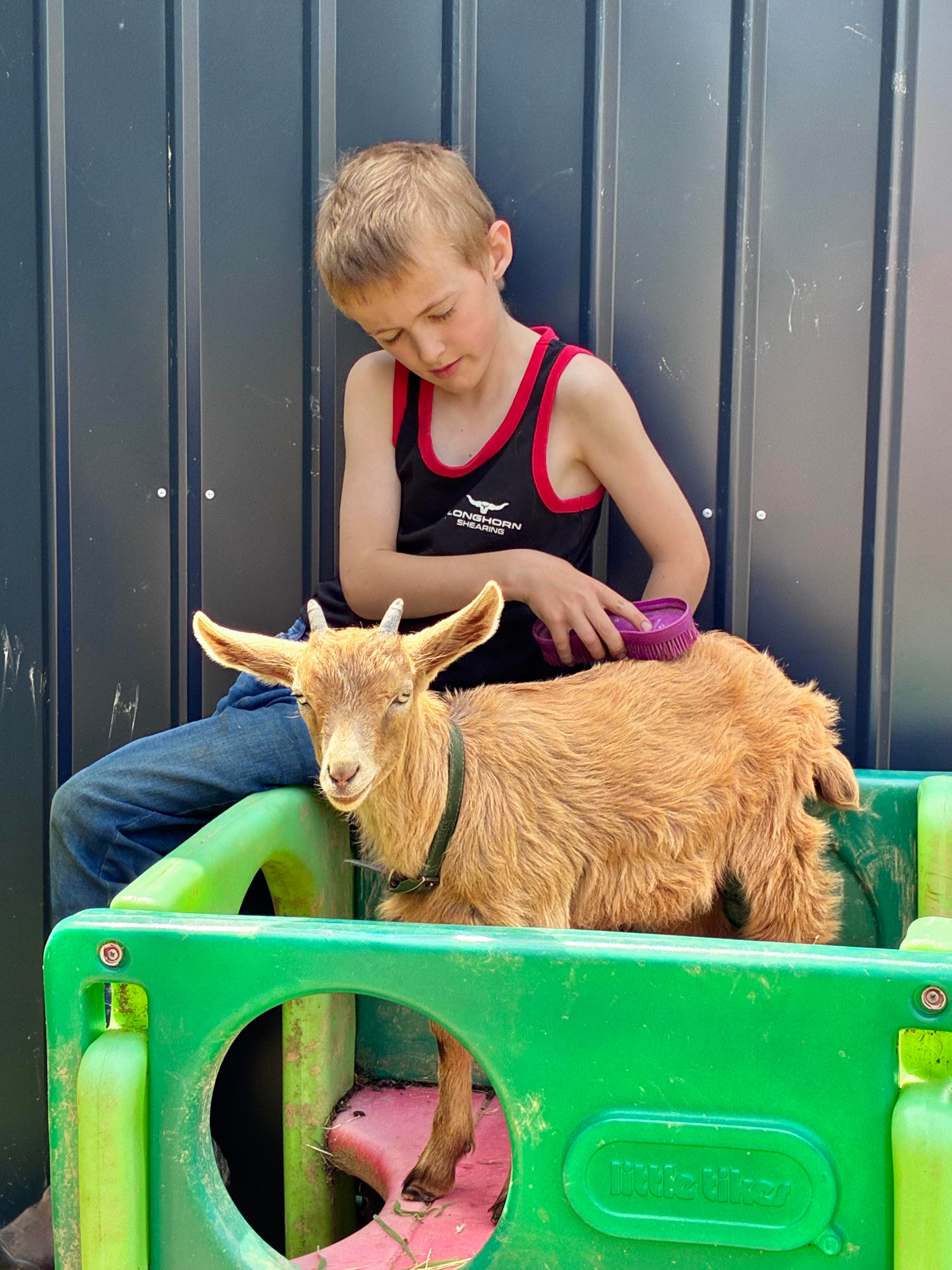
Funding never feels like numbers on a spreadsheet for very long.
LU: You’ve recently received funding through National Grid and Localgiving’s Community Matters Fund (Green Spaces) 2026. Could you tell us more about the project, what the funding will support and what you hope to achieve?
SH: The funding is helping us create Honey Hollow, a safe, welcoming space where children can discover bees, pollinators and the extraordinary little ecosystems buzzing all around them. It will support improvements to our bee area, pollinator-friendly planting, practical equipment and accessible beekeeping activities. Importantly, it will also help us buy an emergency anaphylaxis kit and provide appropriate training, so we can make these experiences as safe and inclusive as possible.
Through Honey Hollow, children will be able to observe hive life, learn why pollinators matter and take part in protecting their habitats. We hope the project will replace fear with fascination and give children a lasting sense that even the smallest creature has an important place in the world, just as they do. So, a very big thank you to National Grid and Localgiving for making it possible.
LU: How important is grant funding like this to The Acrewood Project, and what difference does it make to the work you’re able to deliver in the community?
SH: Grant funding is enormously important to Acrewood. We work hard to keep our sessions affordable, but specialist provision, safe equipment, animal care and improvements to an off-grid site all carry significant costs. Grants allow us to build things properly, reach children whose families might not otherwise be able to access support, and turn hopeful sketches into real, useful spaces. They also give us the confidence to plan beyond the next few weeks and create projects with lasting value.
At Acrewood, funding never feels like numbers on a spreadsheet for very long. It becomes a child safely opening a beehive, cooking lunch over a fire, finding calm beside a goat or proudly completing a certificate they never thought they could achieve. Each grant sends a ripple far beyond the item it buys.
LU: Brilliant. Beyond financial support, what do you think would make the biggest difference to your organisation and the communities you support?
SH: Wider understanding and earlier recognition of children who need a different route through education. Too many arrive carrying the belief that they are difficult, failing or simply “not good at learning”, when often the environment has failed to recognise how they learn best. Better collaboration between families, schools, health professionals, local authorities and alternative providers would help children get the right support before they reach crisis point.
We would also love more local people and businesses to share practical skills, materials and time with us. Acrewood thrives on community. Someone who can mend a gate, teach a heritage craft, donate timber or simply champion our work can become part of a child’s story. It truly takes a village, and ours wears plenty of muddy boots!
LU: And finally, is there anything else you’d like to share with our readers, such as upcoming projects, events, achievements or other ways people can get involved?
SH: There is always something quietly exciting growing at Acrewood. Sometimes it’s a new learning programme, sometimes a building, and sometimes an actual pumpkin! We are continuing to develop our off-grid facilities and create more opportunities for children to learn through animals, nature, food, craft and meaningful work.
We are particularly proud of the children who have begun to see themselves differently here: as chefs, beekeepers, wildlife rangers, builders, carers and capable young people with something valuable to offer.
Your readers can support us by volunteering, donating materials or funds, sharing a practical skill, coming along to community events or simply telling others about our work. Following our journey and celebrating the children’s achievements also means a great deal. Acrewood is built from many small acts of kindness, and there is always room for another pair of muddy boots.
You may also be interested in:
- Community Story: In the Mix Project
- Community Story: Camborne Cluster of Churches
- Are you ready for the Christmas fundraising rush?
- Community Story: Stonebridge City Farm
About Localgiving
Localgiving is a leading online fundraising platform and grant delivery partner, focused on supporting small charities, CICs and community organisations. Since 2010, we've helped thousands of groups across the UK raise tens of millions of pounds and make a meaningful impact in their local communities.
Our platform offers an easy-to-use suite of powerful fundraising tools alongside AI-powered support for finding and applying for grants—equipping organisations with everything they need to grow and succeed.
We also collaborate with major partners, including National Grid and Scottish Power, to deliver corporate grant programmes and connect funding with the communities that need it most.
Join Localgiving today and unlock new opportunities to supercharge your fundraising.
---> Get started with Localgiving with our free 14-day trial